Skip to content
POURCRAFT BAR

WARM WEATHER

The Summer Iced-Drink Station

Counter space
4 sq ft of counter plus one freezer drawer
Serves
2–6 people across an afternoon
Build time
1 hour, plus a night of freezing

The scenario

For the months when nobody wants anything hot and the kitchen sees four or five drinks an afternoon. This station is organized around one fact: ice is the heaviest, fastest-disappearing thing on it, so everything else is arranged around where the ice lives. Built well, it turns an iced drink into a ninety-second job.

Zone by zone

  1. Zone 01 — The ice bin

    An insulated bin with a scoop resting in it, at the end of the run closest to the freezer.

    Ice melts for every foot you carry it and every second the freezer door stands open. Putting the bin nearest the freezer means one short trip instead of six long ones, and an insulated bin holds a working supply for a couple of hours without a puddle.

  2. Zone 02 — The cold base rail

    Lidded pitchers of brewed tea, cold brew and lemonade base — all of them already refrigerator-cold before they arrive.

    Room-temperature base is paid for in ice. Liquid poured warm over cubes spends roughly a third of them just getting cold, which is ice that is no longer in the glass keeping the drink cold.

  3. Zone 03 — The build spot

    A clear 12 in of counter, the glasses, and one measuring cup marked in ounces.

    Every drink is assembled in the same square. Keeping it empty is what lets you build two drinks at once without knocking the first one over reaching for the second.

  4. Zone 04 — Citrus and garnish

    A small board, a peeler, a zester, and halved fruit sitting cut-face down under a damp cloth.

    Cut fruit dries at the face. Face-down under a cloth it stays usable through an afternoon, and having the board permanently set up is what keeps garnish from being the step that gets dropped.

  5. Zone 05 — Fizz, last

    Soda water and the opener at the far end, kept cold, deliberately out of the build zone.

    Carbonated water goes in last and is never stirred. Storing it away from the build spot builds that order into the layout instead of relying on you remembering it at four in the afternoon.

The kit

What goes on this station
ItemWhy this oneGuide
An insulated ice bin with a scoopA bowl of ice on a warm counter is water in forty minutes. A closed insulated bin keeps a working supply through the afternoon and keeps the scoop out of the ice you are about to serve.—
Two 1 in cube trays and one pebble trayTwo sizes cover the whole station: large cubes for anything sipped slowly, pebble ice for anything drunk through a straw where you want the drink cold immediately.Ice Trays & Molds
A Y-peeler and a fine zesterThe peeler takes a wide strip of oil-bearing skin for expressing; the zester takes fine shreds for the surface of a drink. Neither one substitutes for the other.Zesters & Citrus Tools
Two 2-quart pitchers with lidsTwo is the number that lets one chill while the other is in use. Lids matter more than they sound: an open pitcher in a refrigerator picks up everything around it.—
A long bar spoonIt reaches the bottom of a tall glass without you tipping it, which is what stops the syrup sitting in a layer under the ice.—
Straws in an upright jarStanding up and within reach, they get used. In a drawer they do not, and half the drinks on this station are built to be drunk through one.Straws
An absorbent mat under the build spotIced drinks drip constantly — from the scoop, from the glass, from your hands. The mat is what keeps the counter from being wiped six times an afternoon.Bar Mats & Drying Mats
A short stack of 16 oz clear cups with lidsFor drinks that leave the kitchen and go into the garden. A lid also stops a full glass being knocked over on a table outdoors.Cups & Lids

Two things worth getting right

  • 01Fits the most drinks
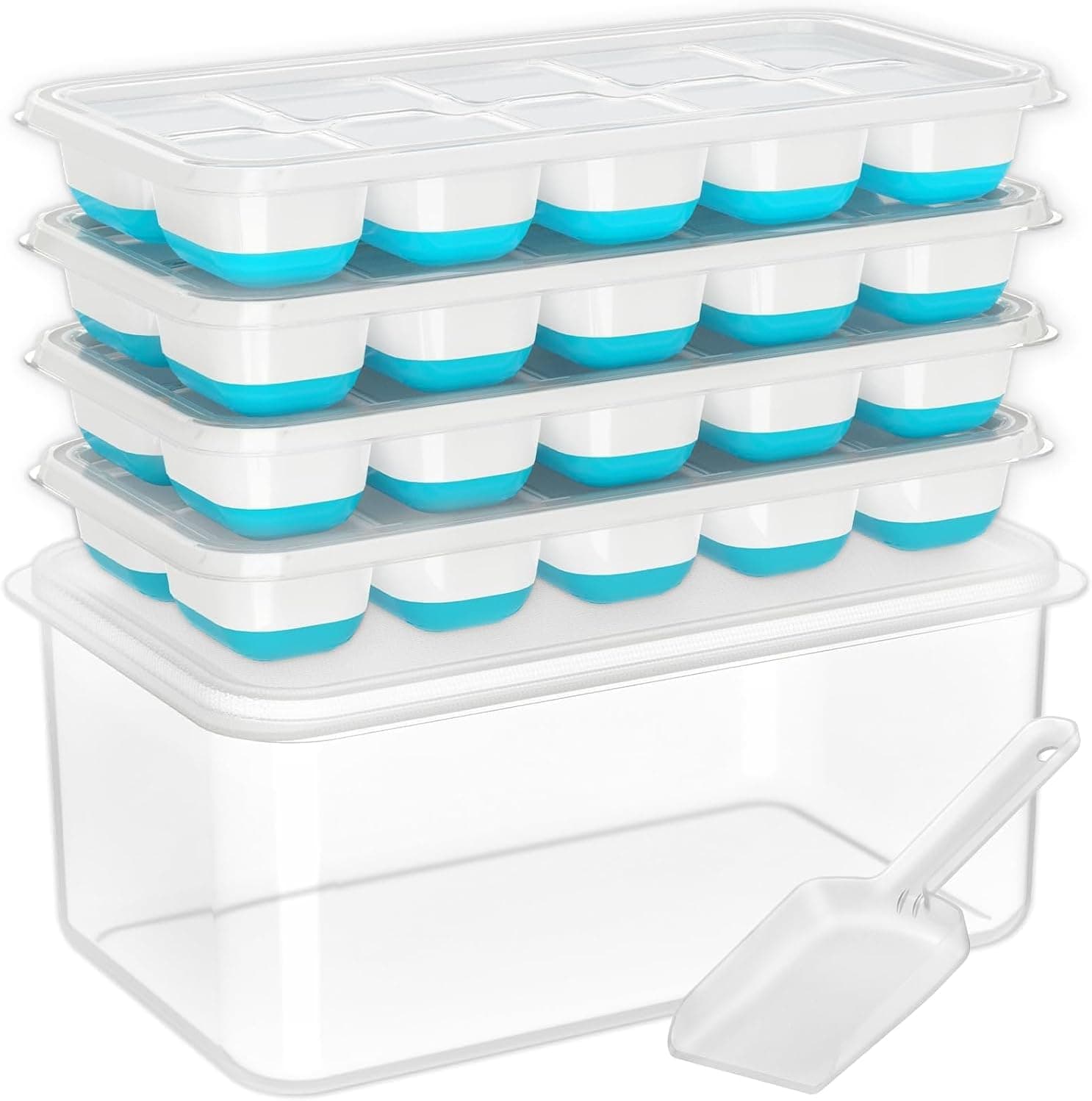
    DOQAUS Ice Cube Trays with Lid & Bin, 4-pack

    DOQAUS

    DOQAUS Ice Cube Trays with Lid & Bin, 4-pack

    Four silicone trays with lids plus a bin and scoop, producing the standard cube that ten of the eighteen recipes on this site call for — more than large cubes and pebble ice combined, and eleven once you count the iced latte that takes either. Four trays plus a bin is also what makes a rotation possible, and freezing time rather than tray count is the real constraint on a home bar.

    Best for
    The default ice for this site — iced coffee, tea, lemonade, sodas, agua fresca
    Key spec
    Silicone, stackable with lids, bin and scoop included
    • Standard cubes suit ten of the eighteen recipes here, and fit a lidded to-go cup
    • Four trays keep a rotation going, which matters because a fill takes hours
    • Lids let the trays stack and keep freezer smells off the ice
    • The bin frees the trays to be refilled instead of storing finished ice
    • Standard cubes dilute faster than a large cube in a slowly sipped drink
    • Silicone trays flex, which makes carrying a full one to the freezer awkward
    • Four trays plus a bin needs real freezer-drawer space
    View on Amazon
  • 01Cleanest cut
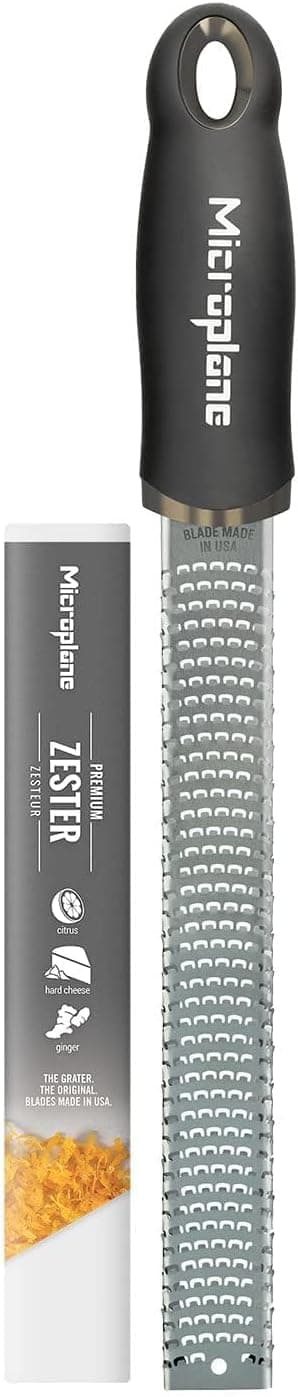
    Microplane Premium Classic Zester & Grater

    Microplane

    Microplane Premium Classic Zester & Grater

    An 18/8 stainless blade with a soft handle, the reference tool for this job. A sharp photo-etched blade cuts the colored layer and stops, which is exactly the behavior the category exists for: oil without pith.

    Best for
    Fine zest over the surface of a finished drink
    Key spec
    18/8 stainless steel blade, soft handle, citrus and hard cheese
    • Sharp enough to take the colored layer without pressing into the pith
    • 18/8 stainless resists the staining that citrus acid causes
    • Soft handle gives control at the shallow angle this job needs
    • Equally at home on hard cheese, so it earns its drawer space
    • No blade cover listed, so it needs careful storage
    • A fine zester cannot take the wide strips that expressing calls for
    • One blade profile only, unlike a multi-piece set
    View on Amazon

Skip these

Things people buy for this station that do not earn their space.

  • Giant 2.5 in sphere molds. They look impressive and then do not fit through the mouth of a normal glass, and a sphere that size takes most of a day to freeze solid in a home freezer.
  • A beverage dispenser with a spigot. The spigot blocks on pulp and fruit, it is the hardest thing on the station to clean properly, and a pitcher pours a glass faster anyway.
  • A countertop ice maker, unless you are serving a crowd every week. It draws power all day to make soft, fast-melting nugget ice, and two trays plus a bag from the shop covers the same need for a fraction of the counter space.
  • Reusable metal straws for a station that serves guests. They need brushing out individually, they conduct cold straight to your teeth, and the wide-bore drinks here need a wider tube than most metal straws provide.

What you’ll make here

Techniques this station relies on

Keeping it usable

  • Empty the ice bin at the end of every day and let it dry open. Ice left to melt and refreeze in the bin fuses into a block you have to chip at.
  • Refill trays the moment they are turned out, not the moment you notice they are empty. A home freezer needs several hours per tray, so the queue only works if it never stops.
  • Wipe the citrus board down after every session — citrus oil goes sticky and then tacky, and a tacky board makes every subsequent peel harder to cut cleanly.
  • Keep cut fruit refrigerated rather than sitting out on the station, and follow the produce-handling guidance linked below for anything that has been cut and is going to be held.

Sources